Canadian Genetic Diseases Network
Creating dynamic partnerships - 1997 Annual Report
| Profile |
| Creating Dynamic Partnerships in Molecular Medicine |
| The Canadian Genetic Diseases Network is a nationwide Centre of Excellence committed to leading-edge research in human genetic disease, and to creating strategic partnerships to commercialize discoveries. |
| The centre's research program focuses on the molecular and cellular causes of common diseases such as Alzheimer's disease, heart disease, and cancer. |
| CGDN's 50 scientists and their teams are based in 18 universities, hospitals, and research centres across Canada. The centre succeeds through dynamic scientific leadership that fosters collaboration among researchers, industrial partners, host institutions, and core technology facilities. |
| Corporate headquarters provides leadership in scientific management and business development. |
| The Canadian Genetic Diseases Network is a member of the Canadian federal Networks of Centres of Excellence Program and has received core funding via the Medical Research Council since 1990. |
| Letter to Stakeholders |
The Canadian Genetic Diseases Network was built by Canada's leaders in human genetics research as a unique partnership among universities, hospitals and industry. As a nationwide centre for genetic disease research, CGDN's achievements have been recognized on many levels. In Ernst & Young's annual Canadian Biotechnology Review for 1997, "Coming of Age", all three genetics research advances selected for citation were made by CGDN investigators. Of the twenty 1997 prestigious Canadian Howard Hughes Medical Institute international research scholarships eight were awarded to CGDN Investigators. CGDN trainees also excel, and have been runners-up and award winners in student competitions in each year since 1993 at the annual meeting of the American Society of Human Genetics, the most important annual forum for human geneticists worldwide.
CGDN's scientific program represents a source of new commercial opportunities. Since 1994, commercial partners have raised $64 million in new investments largely to commercialize CGDN research and technology. Industrial partnerships have also provided $9 million to date in support for CGDN research. 1997 is the first year in which research revenue from industry is equivalent to CGDN's core federal funding from the Networks of Centres of Excellence (NCE) program. Together, public and private investments have provided over 1,500 person-years employment including high quality jobs in new spin-off ventures associated with CGDN, such as NeuroVir in Vancouver and ApoptoGen in Ottawa.
The increasing importance of genetic information provides a unique opportunity for CGDN. The Network brings together in an integrated way a high quality national Network of world-class expertise in genetics. Although geographically dispersed, CGDN is functionally integrated: exploring in different but complementary ways the molecular and cellular basis of disease. To remain competitive, CGDN selects projects through rigorous scientific and commercial review against international standards. As new discoveries occur, CGDN's management and researchers move rapidly to capture intellectual property and apply resources, thereby realizing commercial potential and helping to create new therapeutic and diagnostic opportunities.
In the spring of 1997, we mobilized our entire organization - our scientists, industry partners, management and Board- to work intensively to design a new seven-year strategic plan. Our new plan, entitled "From Genes to Therapies" is a comprehensive approach to capitalize on Canada's genetic diseases research capability through partnerships with a growing number of universities, industries, venture capital corporations and foundations. The plan has been submitted to the federal NCE program for consideration for funding from 1998.
CGDN is building a discovery 'pipeline' which has four inter-related successive research themes:- Gene Identification Relevant to Common Diseases: including multiple genes and gene-gene interactions in such diseases as: rheumatoid arthritis, diabetes, Alzheimer's disease, inflammatory bowel disease, stroke, heart disease and susceptibility to infection
- Molecular Pathogenesis and Functional Genomics: understanding the function of genes, determining how changes in genes and gene regulation cause specific diseases, and elucidating the novel molecular mechanisms which are essential to therapeutic development
- Genetic Therapies: using viral and non-viral approaches in cellular and model systems as prototypes for clinical applications
- Genetics and Health Care: developing technology and information systems to assess genetic susceptibility to disease and improve disease management.
CGDN's future research program will unfold in the context of important worldwide advances in genomic information which is growing at an exponential rate. The human genome will be completely sequenced by 2005, yielding a new world of biological information. The genetic contribution to a growing list of diseases is becoming evident. The detailed understanding of the relationship between genes and disease will alter the way that disease is understood and medicine is practiced. New agents and gene therapies are likely to yield therapeutics of increased efficacy, decreased side effects and improved cost effectiveness. BusinessWeek has commented that fundamental advances in genetics will drive bio-science in the next century and has called the 21st Century - "The Biotech Century".
In moving forward, we will focus on our core strengths: discovery research, training and commercialization. We will enhance transfer of knowledge between our research community and key segments of Canadian society in an effort to ensure that benefits of research are understood and shared widely and effectively. We will consolidate and enrich the training of a new generation of researchers in the broader interest of helping sustain Canada's biotechnology industry in the next century. We will establish a new $20 million foundation to recycle commercialization revenues generated from existing projects, and in turn support future research and early-stage commercialization. We expect to double our industrial R&D; funding, and attract at least an additional $100 million in new commercial investments by 2005.
The efforts of all associated with CGDN is inspiring, and I share the confidence of our partners in the value-added and novel opportunities that CGDN will create.
 Mr. Graham Strachan Chairman of the Board |
 Dr. Michael R. Hayden Scientific Director |
| Three-Year Overview | Highlights | |
| (1994-1997) | (1996-1997) | |
| Discovery A world-class record: |
|
|
| Skills A unique environment to develop human capital: |
|
|
| Partnership New strategic investments in R&D; and commercialization: |
|
|
| Impact Benefit to Canada: |
|
|
| Discovery Research: "From Genes to Therapies" |
We are in the midst of a revolution in medical research, fostered by advances in molecular genetics. Broadly, the new technologies will reduce the burden of genetically determined diseases which represent a major health care burden on society, including disorders such as Alzheimer's disease, diabetes, cancer, heart disease, cystic fibrosis and Huntington disease. At least one in ten Canadians will experience a gene-related impairment or disability by age 25, and at least half the population will ultimately develop a disease which has a genetic component [Baird, P. Am. J. Human Genet. 42:677 (1988)].
CGDN has developed a unique environment for research and enhanced interaction with industry. Through strategic partnerships, a nationwide "centre without walls" for human molecular genetics has been created, spanning 6 provinces, 18 academic institutions and 30 industries. The international profile and leadership of CGDN scientists is reflected in research achievements, and through interest and support for the discovery program by industry and venture capital. A major feature of CGDN is frequent meetings and workshops which present academic and industrial views of science and provide researchers with an opportunity for interaction and a framework supporting research.
Research excellence is sine qua non, maintained through regular and rigorous review of projects against international standards. Annually, a review committee of scientists from across the network evaluates scientific progress assisted by leading international scientists. CGDN uses these reviews to focus its discovery program.
CGDN captures intellectual property generated in its discovery program and seeks partners to develop and commercialize it. Management and resources are applied to bring promising technologies to the point where commercial partners are able to contribute to further development.
CGDN's "From Genes to Therapies" program is designed to promote discovery and application in four major theme areas. The first theme is gene identification associated with common diseases. The second is to determine how these genes contribute to the cause and mechanism of illnesses, i.e., pathogenesis. In collaboration with partners, the third theme is to develop new approaches to therapies. In the fourth theme, CGDN and its partners apply these advances for the benefit of health care.
|
Genetic diseases are caused by mutations in genes which are either inherited from previous generations or occur during a person's lifetime. Discovery of mutations involves cooperation among the affected patients, their physicians and molecular geneticists who analyze DNA.
|
Gene Identification
CGDN researchers continue through collaboration to excel at the localization of genes, their identification and the characterization of mutations causing disease. Researchers have been successful in cloning seven disease genes since 1994 including those genes associated with Alzheimer's disease, apoptosis, breast and ovarian cancer, a key gene in eye development and a Fanconi anemia gene. Three have been cloned in the last year.
Since 1994, more than 25 genes associated with diseases such as colon cancer, psoriasis, resistance to infection, a modifier gene for cystic fibrosis, Tourette syndrome, and diabetes (IDDM) have been localized to chromosomes. The network has identified specific disease-causing mutations and has contributed to databases for cystic fibrosis and PAH mutations that have direct clinical utility.
One of the most dramatic discoveries was the isolation of two genes associated with familial Alzheimer's disease. Alzheimer's disease affects 7% of the North American population over 65 and although the inherited form of the disease comprises 10% of cases, the larger importance of the discoveries lies in the insights they will provide into the more common forms of the disease. Another important advance was the discovery of a family of genes that encode inhibitors of apoptosis (IAPs) relevant to cancers and neurodegeneration. The clinical potential of these discoveries is being explored by a new Ottawa-based company ApoptoGen Inc.
Currently CGDN targets gene identification for a number of complex disorders including inflammatory diseases, diabetes, cardiovascular diseases, bone and joint diseases, neurological and psychiatric disorders.
Molecular Pathogenesis and Functional Genomics
The main objective of projects in this theme is to define the pathogenic mechanisms caused by mutations leading to disruptions in cell function or cell death. Close evaluation of mutations with disease symptoms in vivo and in vitro leads to a clearer understanding of the expression and course of disease - the disease phenotype - findings that have significant clinical implications.
CGDN researchers discovered the role of mutations in an enzyme of folic acid metabolism in cardiovascular disease, the role of retinoblastoma protein in suppressing cancer, the role of apoptosis in development of Tay-Sachs disease, and the role of dynamic mutations in a number of neurological disorders (Huntington disease (HD), Fragile X syndrome, myotonic dystrophy and spinocerebellar ataxias). For example, targeted disruption of the mouse homolog of the Huntington gene was embryonically lethal and caused behavioral and morphological abnormalities in heterozygotes.
In the next year CGDN research will expand into different organisms as models of disease and will include initiatives in advanced bioinformatics and functional genomics technologies. CGDN's scientific leaders identified bioinformatics as a critical area where Canada is weak. Computational biologists are in demand everywhere. CGDN has taken initial steps to put in place an international training program, led by Dr. Phil Hieter, a new faculty member at the Centre for Molecular Medicine and Therapeutics in Vancouver. The initial concentration of training is analysis of DNA sequence information and comparisons with model organisms, allied with Network research teams across Canada. Through collaboration, the Network is also expanding its access to functional genomics which is the application of genetic technologies to analyze gene function. For instance, Dr. Tom Hudson and his Network collaborators at McGill University will utilize high density DNA arrays to assess patterns of gene expression in cancer cells.
Genetic Therapies
These projects employ CGDN's knowledge to develop new therapeutic approaches including novel drugs and gene-based approaches. In association with a number of partners, CGDN is using laboratory and animal models of cystic fibrosis, cancer and Duchenne muscular dystrophy to validate three gene delivery technologies: liposomes, herpes simplex viruses (HSV) and retroviruses. Successful development of third generation HSV vectors has led CGDN to find partners and incubate a company, NeuroVir Inc., to commercialize the technology. Noteworthy also is the development of the first mouse model for hemoglobinopathies and the discovery of a cell that can replenish laboratory-based bone marrow cells. These discoveries contribute to the development of efficient assays for testing gene-based therapeutics. The centre also supports alternate therapeutic strategies, such as enzyme substitution therapy for phenylketonuria - a collaboration with IBEX Technologies Inc., Montreal.
Genetics and Health Care
These projects aim to use genetic information and advances to improve diagnosis and management of disease. Projects target retinoblastoma, breast and ovarian cancer, osteoporosis, atherosclerosis and malignant hyperthermia. Progress has been exceptional especially in retinoblastoma. In collaboration with Visible Genetics Inc., of Toronto, efficient methods for clinical mutational analysis have been developed, patented and commercialized. These methods have resulted in cost efficient diagnosis and testing in families, sparing children without the mutation from frequent, invasive and stressful ophthalmological examinations.
Economical diagnoses of gene defects require a rapid, accurate and cost-effective DNA sequencing method. To this end, CGDN is co-developing with MDS-SCIEX Inc. a new 96 capillary DNA sequencing instrument capable of generating at least 48,000 bases of sequence per two hour run.
Core Technologies
CGDN has 15 core facilities located across Canada designed to provide efficient access to sophisticated technologies which speed discovery. The ability to maintain highly effective core facilities for its investigators nationwide is a notable achievement. Features critical to this success are the skill of core facility directors in meeting the demands of advancing technology, the willingness to periodically dedicate core facilities to single projects in which competition is intense, and constant attention to effective management and resource allocation. The value of these core facilities is reflected in their achievements: e.g., in the race for the Alzheimer's disease genes, the race to target the murine HD, and in other cases, CGDN investigators were the first to publish their findings due to timely core facility support.
| From genes to therapies: Research projects |
Gene Identification
| Investigators L. Field (Calgary) D. Cox, M. Walter* (Edmonton) G. Ebers* (London) B. Triggs-Raine, C. Greenberg (Manitoba) P. Gros, T. Hudson*, K. Morgan, G. Rouleau, E. Schurr* (Montreal) F. Rousseau (Quebec) R. Hegele*, R. McInnes, J. Rommens, S. Scherer*, K. Siminovitch*, P. St George-Hyslop, L-C. Tsui (Toronto) M. Hayden (Vancouver) |
Projects
|
Pathogenesis & Functional Genomics
| Investigators N. Dovichi (Edmonton) R. Gravel, T. Hudson*, G. Mitchell, K. Morgan, G. Rouleau, R. Rozen (Montreal) A. MacKenzie, R. Korneluk (Ottawa) F. Rousseau (Quebec) B. Gallie, D. MacLennan, B. Robinson, P. St George-Hyslop (Toronto) M. Hayden, P. Hieter*, F. Jirik (Vancouver)  |
Projects
|
Genetic Therapies
| Investigators C. Scriver (Montreal) R. Worton (Ottawa) J. Dick, R. McInnes, C. Roifman*, L-C. Tsui (Toronto) L. Clarke*, P. Cullis, M. Hayden, F. Jirik, F. Tufaro (Vancouver)  |
Projects
|
Genetics & Health Care
| Investigators N. Dovichi (Edmonton) C. Scriver (Montreal) B. Gallie, D. MacLennan, S. Narod, L-C. Tsui (Toronto) |
Projects
|
Core Technologies Which Support Research Projects
- Facilities & Directors
- Genotyping
- - T. Hudson*, K. Morgan (Montreal)
- Complex traits analysis
- - E. Skamene (Montreal)
- DNA sequence analysis
- - R. Korneluk (Ottawa), S. Scherer* (Toronto),
M. Hayden (Vancouver), B. Koop* (Victoria) - Bioinformatics training
- - P. Hieter* (Vancouver)
- DNA FISH mapping
- - J. Squire (Toronto)
- Transcribed sequence detection
- - J. Rommens (Toronto)
- Genome alteration in mice
- - M. Rudnicki (Hamilton), A. Nagy*,
J. Rossant* (Toronto), F. Jirik (Vancouver) - Genome alterations in C. elegans
- - J. Culotti* (Toronto)
- In vivo DNA analysis
- - R. Drouin* (Quebec)
- Protein-protein interactions
- - J. Greenblatt*, J. Friesen*, A. Pawson* (Toronto)
- Immunoprobes
- - G. Lee (Vancouver), J. Wilkins* (Winnipeg)
| CGDN Commercial Development - Engine for Growth |
CGDN's portfolio of discovery projects provides a pipeline of commercial opportunities. CGDN's scientists and management ensure that commercial opportunities are recognized and that steps are taken at the earliest stages to provide a base for commercial partnerships and investments.
Working closely with university and hospital partners, and with the advice of commercial advisors and CGDN scientific experts, the Commercial Director takes steps to ensure that commercial opportunities are managed at each stage. Strategies and techniques to manage early-stage technologies have been developed over the past several years, and are now applied successfully to many projects. Historically, the results are shown in the graphs below comparing the levels of industrial funding and investments made in network spin-off companies.
| Creating and Capturing Commercial Value |
- Discovery Research:
- CGDN supports researchers and projects with potential to generate advances related to genetics of common diseases.
- Emerging Opportunities:
- CGDN analyzes data and results in relation to the existing knowledge base and commercial activity.
- Intellectual Property:
- CGDN devises patent strategy and files initial patents in close collaboration with university partners.
- Business Planning:
- CGDN management works with industrial and venture partners to plan routes to commercialization.
- First Commercial Milestone:
- CGDN Strategic Fund propels projects toward first milestones; collaborations and core facilities support rapid advancement of the research.
- Financing:
- CGDN leads team efforts to achieve commercial partnerships and financing.
- Commercial Management:
- CGDN participates in management and incubation of new partnerships or ventures.
- Future Opportunities:
- CGDN uses revenues or shares derived from commercial success to build a foundation fund to support future research and commercialization.
Intellectual property
CGDN research projects are monitored closely, and at moments of discovery, the intellectual property foundations for future commercial development and investment are set. This is a critical step involving rapid and careful analysis of the discovery in relation to state-of-the-art and possibly competing inventions. If patent protection is sought, a patent agent or lawyer with the appropriate expertise is appointed to draft a solid patent application in consultation with the inventors. Efficient and rapid management of this process by CGDN is vital to secure the earliest possible patent filing dates. In the health care sector, robust intellectual property foundations are essential to justify the large investments needed to develop and obtain regulatory approval and market new therapeutic products.
To date CGDN has initiated the filing of 48 patent applications of which 11 are allowed or issued and 20 have been licensed to partners or new ventures.
| Industrial Funding for CGDN Research Projects ($000s) |
Equity Investment in CGDN Spin-off Companies ($000s) 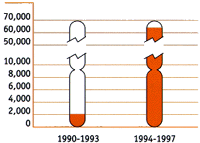 |
Patents & Licenses
| Up to 1993 | 1994-95 | 1995-96 | 1996-97 | Totals | |
| Patent filings Allowed and issued LICENSES |
13 1 - |
6 1 - |
12 4 3 |
17 5 17 |
48 1 20 |
Strategic Fund - critical and timely investments
In 1994 CGDN created a novel mechanism to support commercially promising projects: the Strategic Fund. Each year up to $300,000 has supported specific CGDN research projects which show exceptional early-stage commercial potential. Projects are selected through a streamlined but rigorous competition judged by a panel of experienced CGDN researchers and external industrial reviewers. Projects are funded for one year in order to achieve significant commercial milestones, for instance, data for a patent application or for proof of concept.
The impact of the Strategic Fund has been substantial. For example, investments helped to achieve milestones which enabled the major Alzheimer's disease collaborative program, and the formation of new ventures, ApoptoGen in Ottawa and NeuroVir in Vancouver (see 'Building commercial partnerships ').
Essentially, CGDN's Strategic Fund is used to set a project on a commercial track which will provide impetus for the formation of an industrial partnership or for securing the first venture capital investment. Increasingly, Strategic Fund allocations attract co-funding from other sources of early-stage capital, amplifying the impact of the investment, and accelerating the pace of projects.
In 1997, CGDN secured commitments from three venture capital organizations to participate in the growing commercialization program: Canadian Medical Discoveries Fund (CMDF), GeneChem Technologies Venture Fund, and BioCatalyst Yorkton. These new funds have access to more than $400 million in capital and are interested in investments in genetics and molecular medicine. CGDN's early-stage partnerships provide new routes for effective commercialization of genetic disease discoveries, with substantial potential economic and social benefits.
Strategic Fund Investments
| Year | Project Area | Researcher | Investment | |||
| 1995 | Apoptosis Gene therapy for nervous system Alzheimer's disease Osteoporosis |
R. Korneluk F. Tufaro P. St George-Hyslop F. Rousseau |
$50,000 $59,000 $75,000 $60,000 |
|||
| 1996 | Psoriasis Epilepsy |
F. Rousseau G. Rouleau |
$47,500 $47,500 |
|||
| 1997 | Tissue specific gene targeting Skin & bone disorders Neurological genes Genes associated with common lipid disorders Inflammatory and immunological disorders |
F. Jirik F. Rousseau G. Rouleau M. Hayden K. Siminovitch/L-C. Tsui |
$40,000 $25,000 $45,000 $45,000 $45,000 |
|||
| Retinal therapies | R. McInnes | $25,000 |
|
"Patent status of a biotechnology product is one of the first issues discussed with financial analysts, investors, venture capitalists and potential pharmaceutical partners."
- Graham Strachan Chairman of the Board, CGDN, and President and CEO, Allelix Biopharmaceuticals Inc. |
Building commercial partnerships
The CGDN program has generated many "high impact" scientific discoveries, which have provided the foundation for intellectual property and technology transfer to industry, new corporate R&D; funding, and new company launches. For example:
- In partnership with University of Ottawa/Children's Hospital of Eastern Ontario, CGDN supported research, established the patent position and participated in the 1995 financing of a new company, ApoptoGen Inc. The new company is developing products based on a new family of 'apoptosis' genes implicated in cancer and nerve cell death, discovered by the research teams of Dr. Robert Korneluk and Dr. Alex MacKenzie. In 1997 the company completed a second-round financing.
- CGDN and the NeuroScience Network funded research which enabled three University of British Columbia researchers, Drs. Frank Tufaro, Max Cynader and Michael Hayden to carry out a development program resulting in the formation of NeuroVir Inc. CGDN management led the business planning and incubation of this venture, which raised $4 million in 1995 and an additional $8 million in 1997. The company's first product, a proprietary treatment for brain cancer, is set to move to the clinical trial stage in 1998.
- CGDN management teamed up with University of Toronto and Hospital for Sick Children in 1997 to form an internationally competitive program based on the 1995 discovery by Drs. Peter St George-Hyslop, Johanna Rommens and Paul Fraser and their research teams of two genes which cause familial Alzheimer's disease. Rapid patenting by CGDN, followed by a concerted search for a commercial partner, led to a major collaborative research agreement with Schering Canada/Schering Plough. Schering committed $9 million for R&D; along with milestone payments which could amount to $34 million plus royalties - the largest university intellectual property licensing deal in the history of Canada.
CGDN's commercial initiatives (see following table) provide a broad validation of the research and management approaches developed and adopted by CGDN.
Each of these ventures and partnerships benefits from CGDN's early-stage technology management and ongoing relationships with CGDN's management team and advisors. The companies provide the potential for enhanced receptor capacity for CGDN technologies, new collaborations and research revenues for CGDN's research program.
CGDN's commercial initiatives and partnerships with industry provide new employment opportunities and also encourage entrepreneurship. To date, 25 CGDN trainees have been hired by industry and two have started their own companies. Thirteen investigators are involved as scientific founders in new ventures, ensuring that business plans and operations have the advantage of competitive science as well as the supportive and effective linkages of CGDN's broad program, core technology facilities and commercial management.
Sustained support for CGDN's discovery program combined with new investments in commercialization, together provide a strong "engine" for long-term progress in Canadian molecular medicine. The engine is fueled by the essential creative activities of trainees, researchers and managers working together to achieve globally competitive results.
| Company | 1996-1997 program | |
| Apotex ApoptoGen BioChem Therapeutic IBEX Technologies INEX Pharmaceuticals MDS-SCIEX Merck Frosst Merck Frosst Merck Sharp & Dohme Myriad Genetics NeuroVir Rhone-Poulenc Rorer Schering Canada Visible Genetics XENON Bioresearch |
Retinoblastoma protein study Apoptosis/cancer BCG therapy PKU treatments Liposome carrier therapy DNA sequencing technology Tyrosine phosphatases Centre for Molecular Medicine & Therapeutics Phospholamban interactions Breast cancer Neurological/cancer therapy Gene therapy trials Alzheimer's disease/presenilin genes Retinoblastoma/cancer diagnostic systems Gene identification in unique populations |
|
| ______________________________________________________ | ||
|
Electronic communications are vital to maintain contact among all researchers and partners, regardless of geographical distance. The CGDN website is being further developed to disseminate information for a curriculum enrichment program for students.
|
| Management Discussion & Analysis |
CGDN's 1996-1997 record includes a number of notable successes, scientifically and commercially. This section discusses the factors which underpin CGDN's operations and future plans.
Scientific leadership and the road ahead
In preparing CGDN's strategic plan for 1998-2005, our scientific leadership has designed a discovery program based on genetics relevant to common diseases, in view of the potential to make significant discoveries which lead to commercial returns. CGDN's scientific leaders consulted widely with academic and industry leaders across Canada to develop the new program. New proposals were invited and subjected to rigorous review prior to inclusion in the strategic plan. CGDN has generated significant interest in this new program from industrial partners and investors who have committed $16.7 million in direct industrial funding.
CGDN has proposed to NCE a seven year core funding program. The seven year period is important because it will allow CGDN time to build a f oundation fund that will recycle CGDN's share of revenues from commercial successes into further genetic diseases research. The fund would need to be at least $20 million in size to yield about $1.5 million per year - sufficient, if matched from other federal, provincial and private sources, for CGDN to operate a strategic R&D; program from 2005. The estimates for building the fund (see graph) are based on projections of revenues from CGDN's shares of current and future commercial initiatives.
(based on Ernst & Young projections, 1997)
CDN $million
Partnerships
The Network's unique model of partnership allows researchers and their laboratories to tackle larger projects than would otherwise be feasible. Linking experts and core facilities provides the interdisciplinary support that is necessary to attain project milestones. In 1996, DNA sequencing facilities generated 667Kb of finished and 1,789Kb of single-pass sequence, while the gene trapping core facility was key to the discovery of the Alzheimer's disease genes and a breast cancer gene. The result of this synergy (shown below) is measured in the 42% increase in peer-reviewed publications from multiple research groups.
| Publications from more than one research group (1/3 of total peer-reviewed publications) |
CGDN builds on well established university and hospital infrastructures making critical scientific and commercial contributions to promising aspects of scientific programs supported from a variety of sources: the Medical Research Council of Canada, other federal agencies, and disease foundations such as the Arthritis Society. For example, the Centre for Molecular Medicine and Therapeutics (CMMT), to be housed in a building to open in 1998, is the brainchild of CGDN's scientific leadership and management. The CMMT represents Merck Frosst's largest extramural investment worldwide and will strengthen the genetics infrastructure on Canada's Pacific coast. The $40 million investment includes $15 million for a discovery research program from Merck Frosst; $9 million from the Province of British Columbia for a new building; four tenured professorships from the UBC Faculty of Medicine; and funds from the BC Children's Hospital Research Foundation for expansion of the building to house additional researchers.
Industry - academic interactions
A central element of CGDN's program is maximizing interactions at all levels between academics and industry. The Network has been successful in increasing the number of substantive academic and industrial interactions. These activities show a 90% increase in industrial funding for CGDN research.
An additional challenge is the globalization of the pharmaceutical and biotechnology industries. CGDN's response is to support research excellence that creates vital pharmaceutical investment in Canada by companies like Merck Frosst and Schering Plough. CGDN management works with scientific founders and venture capital partners to plan and finance new Canadian companies based on their capability to develop specific technologies.
Funding
The present and future success of CGDN's program depends on a continuing flow of new knowledge and intellectual property with the potential to lead to novel therapeutic approaches. CGDN uses approximately 70% of its core federal research funding to support this discovery program and spends approximately 20% of the remaining budget to manage the early-stage support for technologies with commercial potential. Direct industrial revenues typically support development of existing discoveries. This support has shown substantial growth in 1996 - 1997. In CGDN, funding for commercial development complements the critical core federal funding for discovery research.
| Industrial Funding of CGDN Research (cash and in-kind) $million |
Federal funding has also leveraged cash support for the research program from provincial governments, disease foundations, and other sources. These sources are expected to play a larger role in the future. In 1997, CGDN succeeded in developing cost sharing arrangements with eight hospital, foundation and industry partners to support new training.
Economic and social impact
During 1996 - 1997, a number of scientific discoveries contributed directly to creation of intellectual property and technology transfer to industry, and resulted in new corporate funding and the launch of new companies. Long-term economic and social impact will be measurable when these activities result in products launched on the market. Meanwhile, CGDN measures its impact through its contribution to intellectual property, investments, training, new job opportunities, emerging benefits for the health care system and in education in general.
Highly skilled workforce
Building a critical mass of highly skilled scientific personnel is essential to the future of the Canadian biotechnology industry and is a priority of the CGDN research program. A total of 293 trainee research associates, postdoctoral fellows, graduate students, and undergraduate summer students worked in Network laboratories during 1996 - 1997, under the mentorship of senior scientists. The number of graduate students increased by 28% in 1996-1997 while Ph.D and M.Sc completions almost doubled, increasing from 11 to 20.
| Trainees (1996 - 1997) | |
| Research associates Postdoctoral fellows Graduate students Summer students |
7 69 110 30 |
| ____________________________________ | |
CGDN researchers provide trainees with in-depth scientific training and the experience of teamwork with industry, adding value to Canada's human resource for scientific research in general and the biotechnology industry in particular. For example, CGDN sponsored its trainees to attend the 1996 Network annual scientific meeting and the 4th International Nature Genetics conference in Vancouver.
Mentoring is an essential part of sustaining research capability in genetics. The Network has established a new "CGDN Scholars" Program which will give Network membership to outstanding young researchers in the first few years of their academic appointments. Scholars have access to CGDN workshops and meetings, core facilities and Strategic Funds, and will benefit from close working ties with senior Network researchers. Five CGDN Scholars have been selected through a national competition. Other training includes inter-laboratory study visits across Canada, industry-supported careers seminars, and patenting and intellectual property workshops by legal professionals.
|
Very rapid DNA screening for genetic disease will revolutionize clinical genetics laboratories into the next century. In partnership with MDS-SCIEX of Ontario, CGDN supports research at the University of Alberta to develop ultra-fast methods to sequence DNA. This colour diagram depicts 400 bases of DNA sequence analyzed in 90 minutes.
|
New job creation
Strong commercialization partnerships among CGDN, universities, and industry has encouraged significant private-sector investment in the biotechnology industry in Canada, and a growing payback to Canada's economy.
The number of public and private investments, which have been made since 1990, total $105 million and have created an estimated 1,500 jobs over seven years. A job is defined as a full-time position for one year. We have calculated that 200 jobs have been created from industry-funded positions in academic laboratories, 400 jobs have been created by network spin-off companies, and the remainder are to be found in university and hospital laboratories funded from the core CGDN program.
Over the next several years CGDN will encourage and leverage investments of many millions of dollars due to its commercialization programs. These investments will create additional new jobs.
Health care benefits
One in two Canadians will develop a genetically-related disease, with one in ten cases leading to premature death. The cost exacted in both human and economic terms is massive. Through a scientific program of wide application to common diseases with a genetic predisposition, CGDN is successfully developing the knowledge base for improved health care and therapies, as well as significant economies in health care provision. CGDN's projects passed significant milestones in 1996 - 1997, for instance:
- In 1996, the identification of a progenitor bone marrow cell which creates blood-producing cells provided an important advance in the study of blood diseases e.g., thalassemia.
- Also in 1996, studies showed that that a new blood test can save the Canadian health care system up to 70% of the cost of the conventional surgical process for the childhood eye disease, retinoblastoma. The disease, cancer of the retina, is developed prenatally or up to age 4 and can lead to blindness or death.
- NeuroVir Inc. worked with a unique vector technology which uses the herpes simplex virus to produce therapies for cancer and diseases of the nervous system. Developmental advances were made in 1996 and 1997 which will lead clinical trials early in 1998.
Education
CGDN promotes awareness of genetics and genetic diseases as the most effective tool in helping the public to make informed health care choices and in assisting politicians make decisions on public policy and medical ethics. In 1996 - 1997, CGDN coordinated meetings between a dynamic committee of leaders from the biotechnology industry and all levels of government. In addition, ten articles on our scientific advances were written in leading Canadian newspapers, together with prominent editorial and ongoing radio interviews. To more effectively serve this demand for information, a new CGDN web site was launched early in 1997 and has attracted nearly 1,000 visitors in its first months of operation.
| Financial Review |
The financial information contained in this Annual Report was prepared by Canadian Genetic Diseases Network management in accordance with the requirements of the federal Networks of Centres of Excellence program.
The integrity and control of Network expenditures and accounting is the responsibility of the Board of Directors and management in cooperation with the financial departments of academic institutions which receive Network funds on behalf of CGDN scientists. CGDN reports annually to the federal NCE directorate in Ottawa on expenditure of federal funds and revenues from non-federal sources.
Statement of Revenues from Canadian Sources| 1996-1997 | 1995-1996 | 1994-1995 | |
| NCE (Cash) Non-NCE Industry Cash In-kind Canadian disease foundations Cash In-kind Provincial governments Cash In-kind Total Non-NCE Grand Total |
$3,035,156 $2,857,737 $481,625 $2,148,641 - $399,500 $464,000 $6,351,503 $9,386,659 |
$3,948,437 $1,380,872 $575,400 $3,549,200 - $322,900 $487,600 $6,315,972 $10,264,409 |
$5,972,382 $826,900 $445,400 $900,000 - $154,700 $480,000 $2,807,000 $8,779,382 |
Consolidated Statement of Revenue & Expenditures (NCE funds)
| 1996-1997 | 1995-1996 | 1994-1995 | |
| Revenues from NCE Current year award Funds on hand Total revenues Expenses Research projects Core Facilities Strategic projects Research administration Commercial administration Total Expenses Commitments & Carryovers Balance |
$3,035,156 $186,234 $3,221,390 $1,689,147 $563,396 $95,000 $478,025 $91,442 $2,917,010 $304,380 $0 |
$3,948,437 $1,032,553 $4,980,990 $2,659,069 $939,743 $244,000 $617,142 $334,803 $4,794,757 $186,233 $0 |
$5,972,382 $310,337 $6,282,719 $3,322,421 $1,248,398 N/A $551,648 $127,699 $5,250,166 $1,032,553 $0 |
| Notes to Financial Statements |
The Network's federal NCE funds, which are allocated through the Medical Research Council, are initially received at the University of British Columbia. The Financial Services Department of UBC, under the instruction of CGDN management, disburses funds to Network scientists at academic institutions where research is conducted in accordance with a budget approved by the Board of Directors. Accounting at UBC and the institutions is conducted according to Medical Research Council and CGDN policies.
The Consolidated Statement of Revenues and Expenditure (NCE funds) was prepared in conformity with accounting principles generally accepted in Canada and reflects actual expenditures.
The Statement of Revenues from Canadian Sources reflects cash income and in-kind support which is leveraged by NCE funds. Income shown has been paid either directly to scientists or to the Network administrative office. In-kind support is provided through consultative and/or scientific services, research materials, participation in meetings and committees, and infrastructure provided for the Network management headquarters.
Strategic project expenditures are research awards to Network scientists for projects with strong commercial potential.
Research administration expenditures are the operational costs of the administrative office and the Board of Directors plus Network communications, the annual scientific meeting, and training.
Commercial administration expenditures are administrative, patenting and legal costs associated with commercialization of Network research.
Commitments are costs and liabilities incurred in the current fiscal year and expended in the following fiscal year. Carryovers are unexpended funds or deficits which are carried forward to the next fiscal year.
(2.9 million)